
What's helpful to know about fitting baby into your petite breast?
Your breast size doesn't determine the amount of milk you can make
Just to be clear up front, having a petite breast doesn't mean that you'll have any problems making milk! You can find out more about why the size of your breast doesn't affect your capacity to produce milk here.
You can watch a video of a baby breastfeeding beautifully from a petite breast here.
However, here are some things that might be helpful to know if you have a petite breast and challenges arise.
Any bulk of cloth at the base of your breast may interfere with baby’s landing pad
If you do have a delicate breast, any bulk or roll of cloth around your breast can interfere with fit and hold. Your baby needs a good 10 centrimetres-diameter landing pad for his face-breast bury. Pulling down your camisole nursing cup and laying it very flat against your chest and tummy is the best option. Things may go best if you remove the breast pad, too.
Your elbow is much lower than your nipple, resulting in downward nipple and breast tissue drag
Even in the semi-reclined position, it’s normal for a woman with a petite breast to find that her elbow sits quite a lot lower than her nipple. This is particularly the case for women with a body type like mine – taller, with a longer torso, and petite breast.
This height difference between the nipple and the elbow can result in nipple pain for two reasons.
-
Your nipple and breast tissue are easily dragged downwards in the vertical plane.
-
Your baby’s face can tend to roll outward, with the upper cheek not as pressed in as the lower cheek.
In the photo below, you can see a woman with a petite breast (which is full and tight with milk) holding her shoulder up high on the side that her baby is breastfeeding, so that she is able to use her forearm to bring his little mouth up to where her breast falls in the semi-reclined position. Unfortunately, this can result in shoulder and neck pain.
.jpg)
What can you do to make sure your baby isn't dragging your breast tissue downwards?
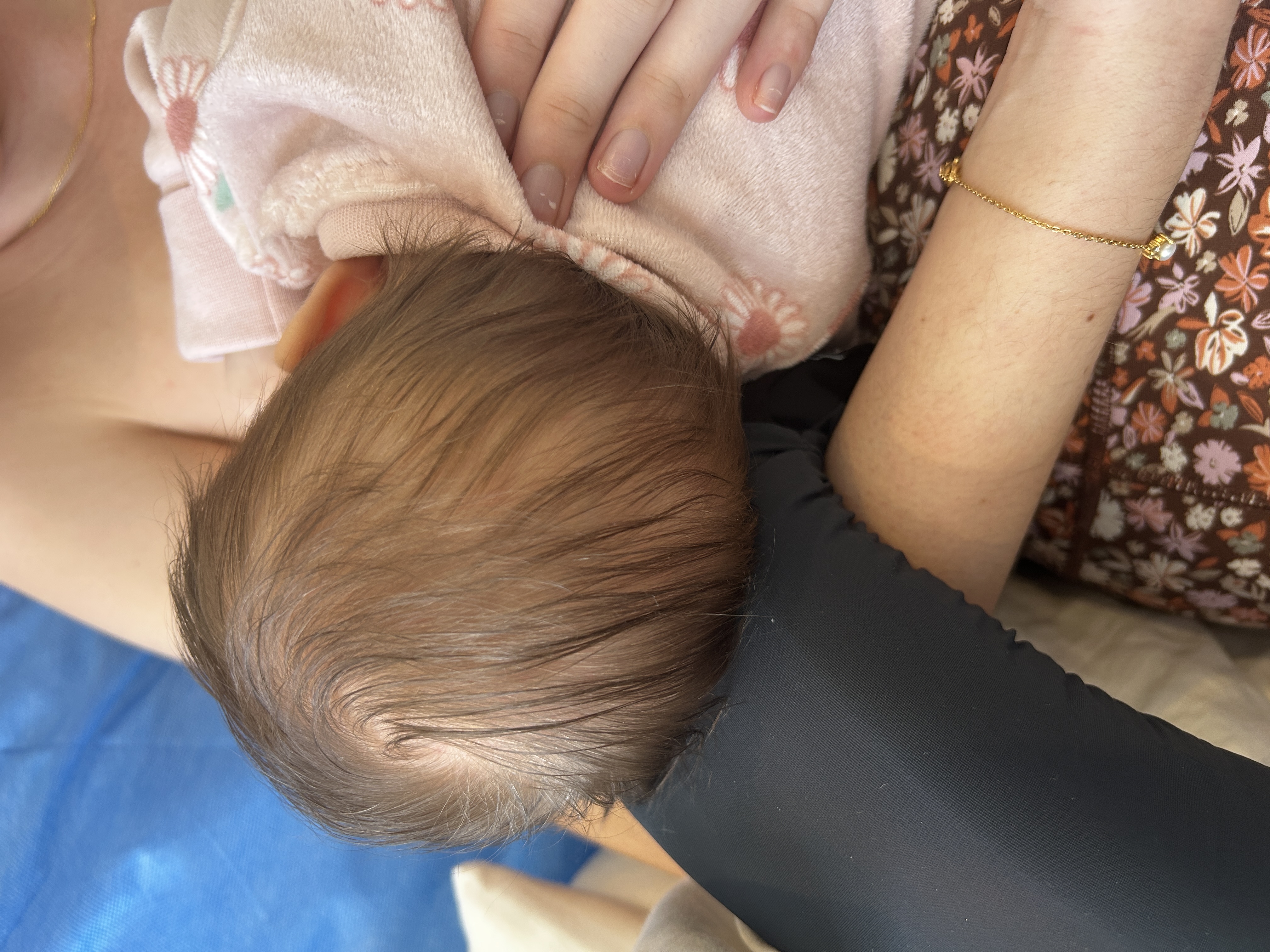
It can help to drape a small towel (or similar item) folded up into a 8-10 cm strip over your forearm, so that baby’s mouth comes up to the same height as your nipple [ still with you semi-reclined – without you needing to scrunch your shoulder up very high to bring your forearm up.
Although this seems annoyingly fiddley at first, it can bring relief from pain initially, and will quickly become unnecessary as baby grows.
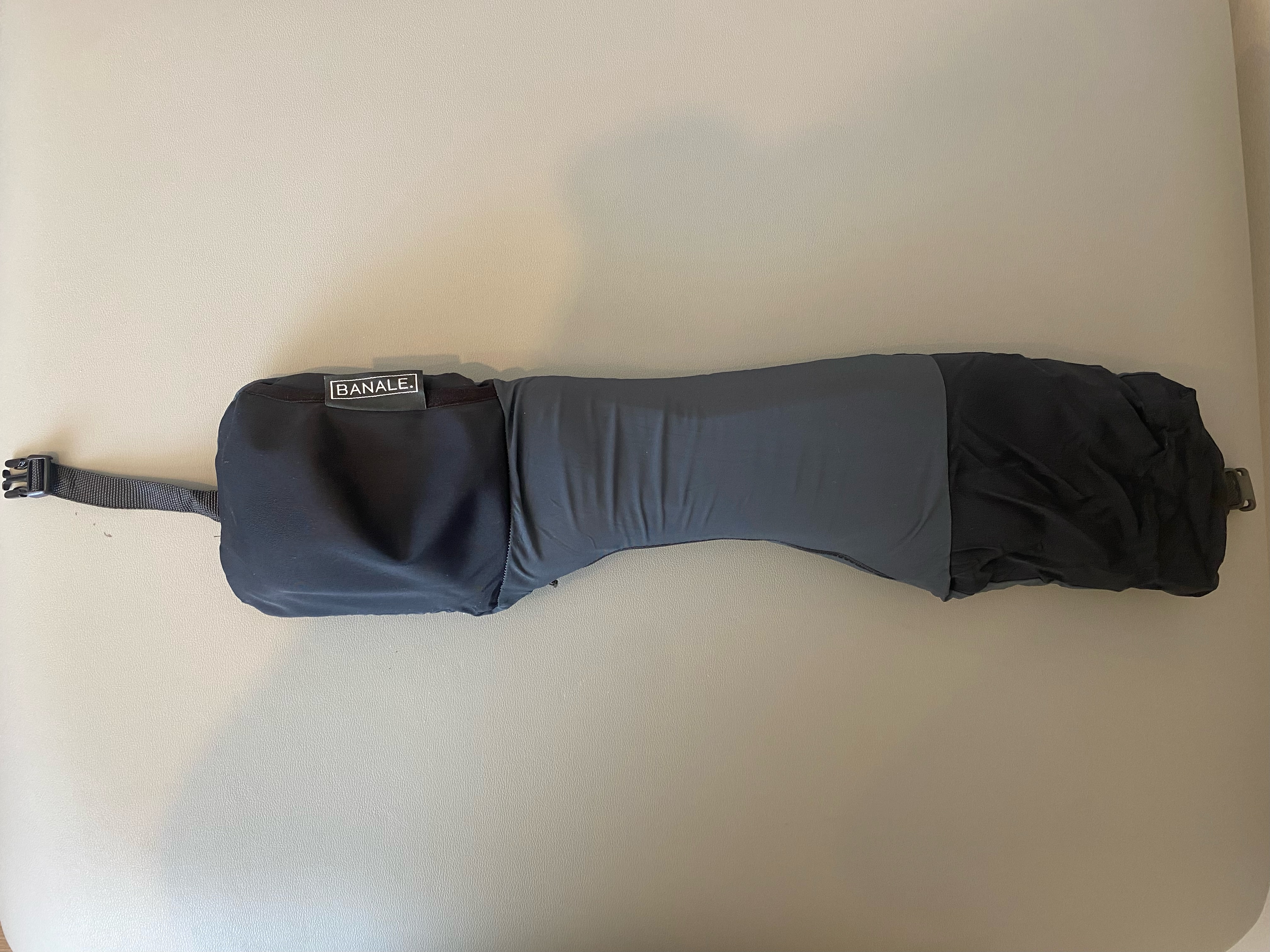
Sometimes in the clinic, I'll work with a woman for whom the downward nipple drag is a problem, by draping a memory foam neck brace over the forearm that she is using as a lever under her baby's head. This can work well.
Here is a photo, immediately below, of the neck brace which I've used to give help lift the baby without the woman needing to strain her shoulders.
Here is a photo of a woman with a petite breast and who came in with nipple pain using the neck brace over her forearm to help stabilise her baby at the breast. She experienced immediate relief.
Breast-belly contour challenges
The same breast-belly contour problem, which affects angles of baby's face-breast bury, can occur as easily when you have a delicate breast as when you have a generous breast. Being semi-reclined remains very important, and being aware of this challenge as you use your micromovements is very helpful.
Diagram 1
This sketch (which I promise once PBL is bedded down we'll get upgraded!!!) shows how sitting upright closes the angle and space between breast and abdomen.
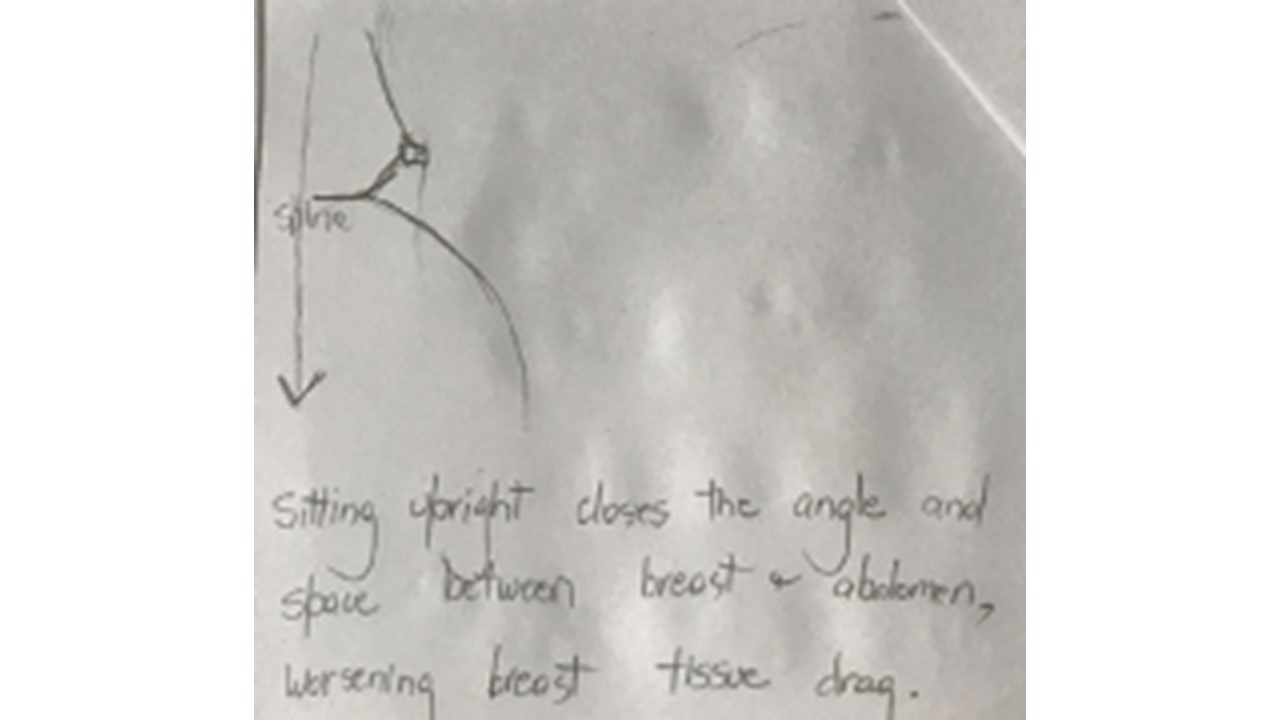
Diagram 2
This sketch (which I also promise to improve) shows the challenge of trying to fit baby's face + shoulder because of the lady's breast-belly contour and how that impacts on the shoulder width, to change the angle of the face-breast bury so that breast tissue drag is likely.
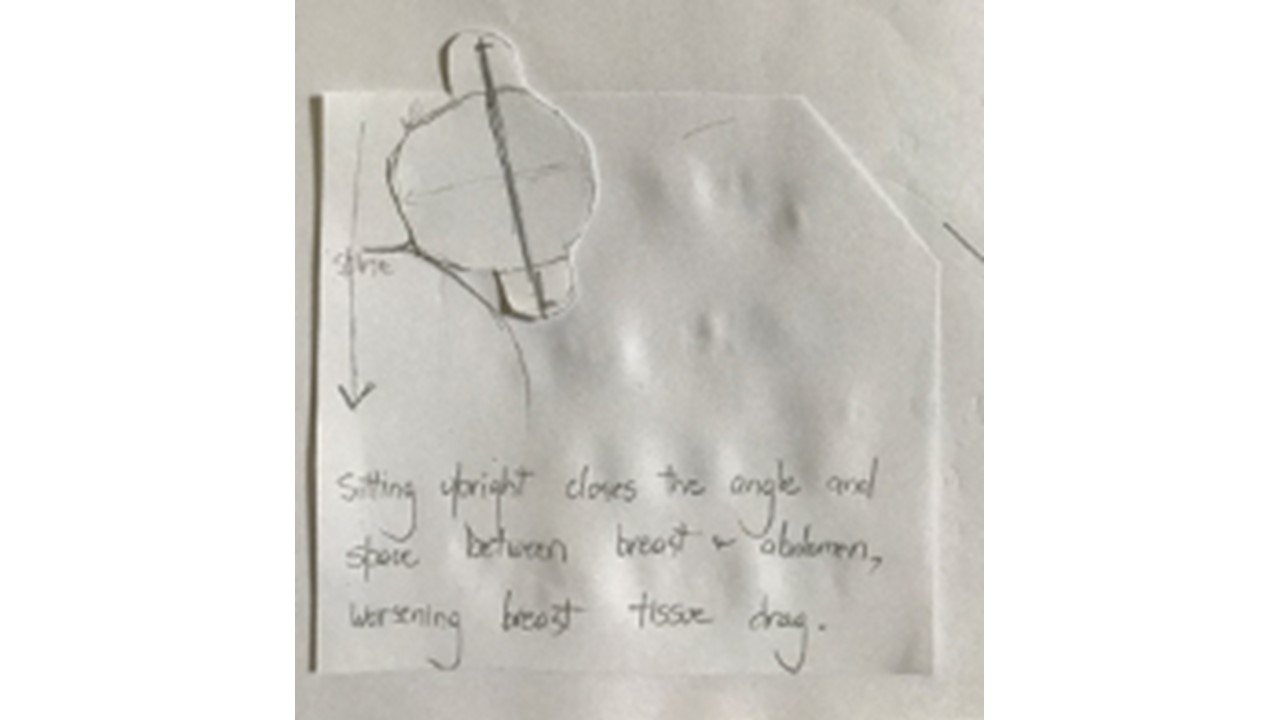
Diagram 3
This third sketch (which isn't that bad) shows the affect of being semi-reclined on the landing pad.
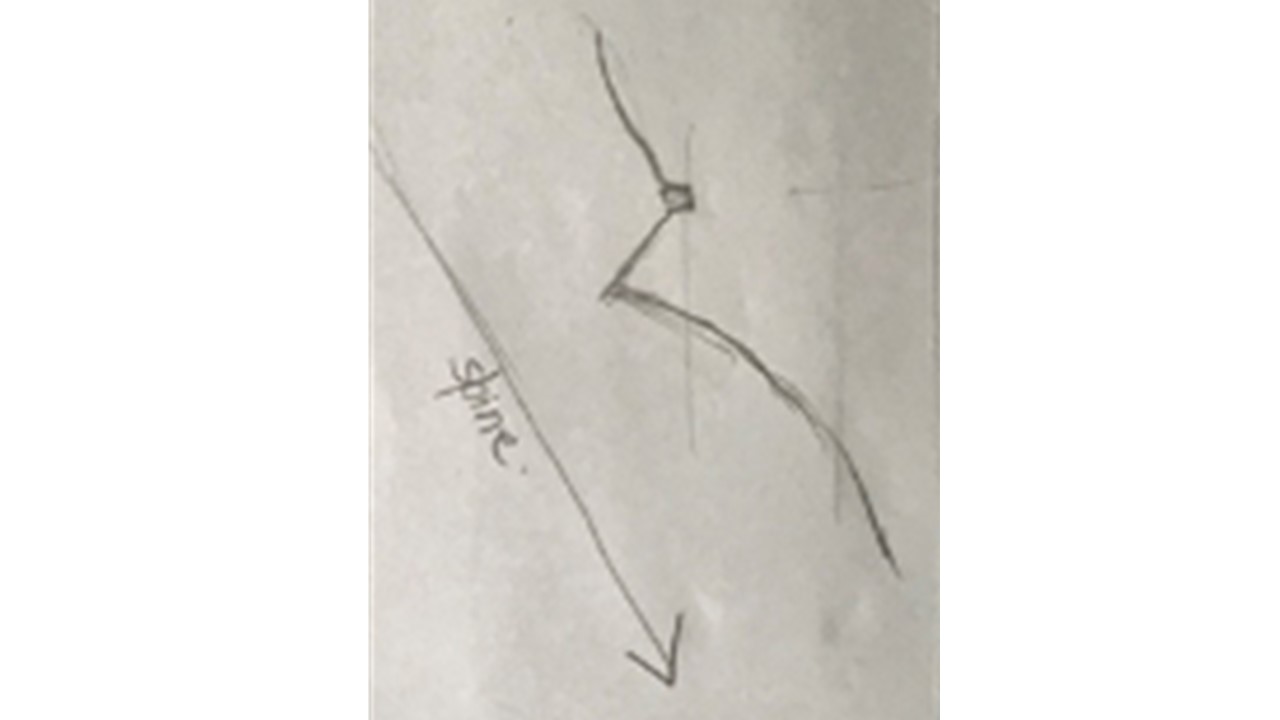
Diagram 4
This fourth sketch (surely one of my better ones, hopefully you agree) shows how being semi-reclined allows the baby's shoulder width to fit without skewing the angle of baby's face-breast bury, resulting in nipple and breast tissue drag.
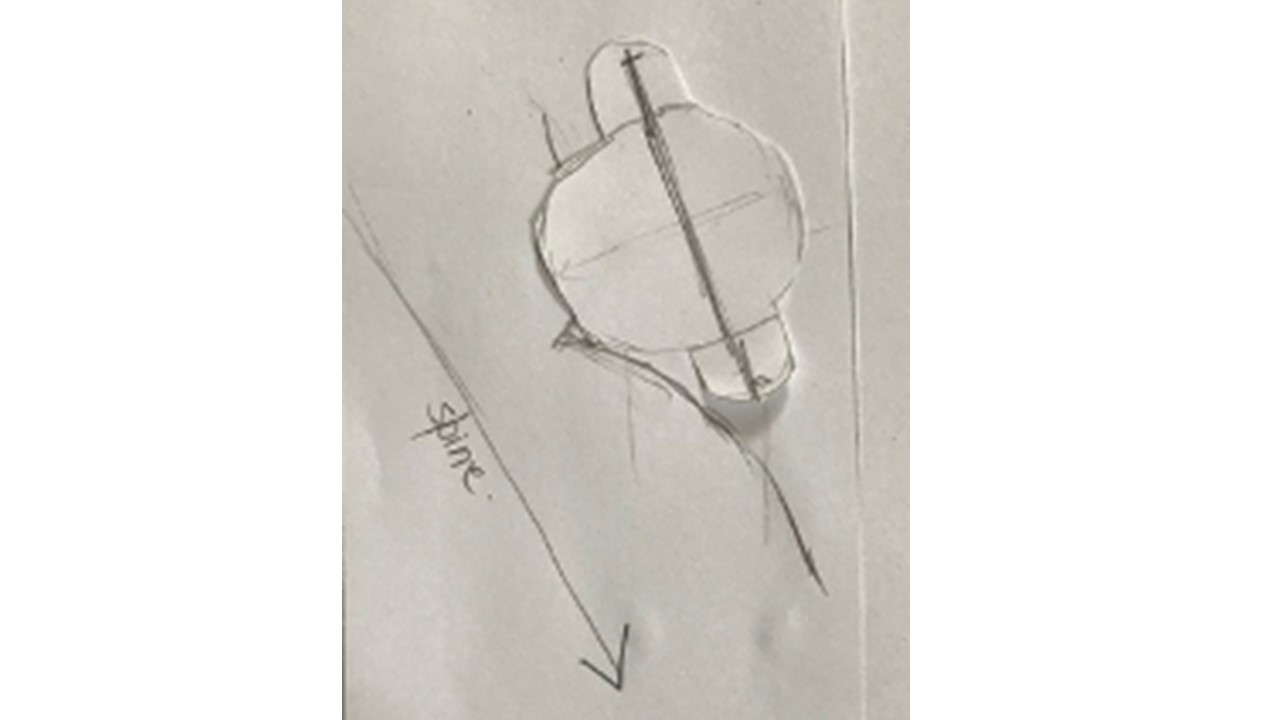
Recommended resources
The mother of a three week old has severe nipple damage (clinical demonstration: what we did to help)
The size of your breasts doesn't predict how much milk you'll make
Working breasts are diverse on the outside
Nipples and areolas enjoy diverse size, shape, colour; nipples look in many different directions!