
Why moist wound healing is likely to increase the risk of nipple epithelium pain, inflammation and damage during breastfeeding
Why is moist wound healing widely recommended if a breastfeeding woman has nipple pain or damage?
"There is a need for rational simplification of wound care." Conde-Montero et al 2024
Through the first years of my professional life as a GP with qualifications in clinical breastfeeding support, standard advice was to keep nipple wounds as dry as possible.
But from 1997, clinical protocols for lactation-related nipple pain and damage have taken a moist wound healing approach, teaching that hydrogel breast pads, highly purified lanolin, or the new generation of polymeric membrane technologies, help heal nipple pain and damage during lactation.
-
Now, health professionals typicallly recommend hydrogel breast pads, highly purified lanolin, or various polymeric membrane dressings for nipple damage.
-
Companies promote the belief that their products will heal nipple pain and wounds in lactation, quoting methodologically weak studies.
Given the high prevalence of nipple pain and damage in breastfeeding women, this is a lucrative market. Manufacturers advertise these (false) claims to lactation support professionals in sponsorship of health professional education.
Benefits of common moist wound healing products inaccurately promoted to lactating women
-
Hydrogel or glycerin dressings are comprised of cross-linked hydrophilic polymers and are up to 96% water. They are absorbent of moisture and appear to reduce pain by creating a cold surface on the wound.
- A box of hydrogel discs claims that they “allow… you to continue breastfeeding. The discs keep the nipple area dry and restores your skin’s natural moisture. … aids healing of broken skin.”
-
Lanolin for lactating nipples is treated with hydroxypropyl acrylate (HPA lanolin), which removes pesticide and detergent residues.
- Lansinoh ointment's claims are more modest: the website states that HPA lanolin is “the #1 recommended nipple cream, thick and rich to soothe and protect sore nipples,” though it does cite a very methodologically weak consumer survery on its website. However, promotions of Lansinoh Soothie gel pads claim they "help[s] heal sore nipples so you can continue to breastfeed." (https://amzn.asia/d/aWe77zc 4 September 2024).
-
Nursicare or polymem dressings claim (https://www.polymem.com/mkl/MKL713.pdf 4 September 2024): "Nursicare pads facilitate fast pain relief and quick wound healing. No other products or treatments are needed or recommended. The pad is also useful when the mother feels pain with no visible wound, friction or rubbing."
Why moist wound healing does not improve and may delay healing of lactation-related nipple inflammation and wounds
Signficantly, there's still little international consensus on ideal acute wound care even after common skin procedures and excision, with differing recommendations being given to patients around the world.
It’s not surprising, then, given the frontier status of clinical breastfeeding support, that there is very little evidence to guide how best to heal nipple wounds. The NDC Clinical Guidelines on this topic rely on the NDC mechanobiological model of nipple pain and damage, which is developed from pathophysiological mechanisms, research from wound care resesarch more broadly, and clinical experience. These NDC Clinical Guidelines have been peer-reviewed and published in the international research literature.
The NDC Clinical Guidelines acknowledge that the nipple and areola skin during lactation have both specific protective biological powers, and also specific vulnerabilities. These are detailed here. The NDC Clinical Guidelines proposes that lactating nipples are at risk of overhydration and MASD when exposed to prolonged moisture, which places the lactating women at particular risk of worsened damage or delayed healing, because her nipple is exposed to highly repetitive mechanical or shearing forces.
Studies show no benefit to moist wound healing
You can read about all the studies done to evaluate the effectiveness of moist wound healing of painful or damaged nipples during lactation, which in overall aanalyses find no benefit, here. Here I apply clinical reasoning to support the NDC Clinical Guidelines and mechanobiological model for lactation-related nipple pain and damage, relying upon what we know about the specific biological protections and vulnerabilities of lactating nipple and areola skin, found here.
Clinical reasoning casts doubt on moist wound healing
-
Why would we treat nipple wounds as if they are the same as chronic wounds, which result from blood circulation insufficiencies, or pressure sores, or from diabetes? Nipple wounds are acute wounds in highly vascular otherwise healthy tissues, caused by repetitive mechanical microtrauma.
-
Why would we treat nipple wounds as if they are the same as a burn wound, which we try to seal for healing, when the nipple is constantly exposed to repetitive mechanical pressures?
-
With skin grafts we don’t graft a big piece of skin and then leave it open to the air: it’s closed with emollients until healed. But why would we treat a nipple wound as a skin graft, when the nipple is constantly exposed to repetitive mechanical pressures?
-
Semi-permeable membranes can prevent skin maceration, but bras alter the environment of any semi-permeable membrane, which is no longer directly exposed to the air, exacerbating the risk of overhydration. 5
Theoretical frames cast doubt on usefulness of moist wound healing
Because I use the lens of evolutionary biology, I have been reluctant to assume that we can improve upon the ancient and powerful selective forces of evolution, which have optimised wound healing of the human skin. Although we live in complex cultural contexts, and as clinicians need to work pragmatically with the widespread culturally-determined practice of bra-wearing, it is reasonable to assume that we can trust the nipple skin's capacity to heal without technology or dressings, once we are alert to the special biological context in which the wound has occurred.
Because I use the lens of complexity science, I know that interventions into the sophisticated complex adaptive systems which are activated in human wound-healing may trigger unintended consequences. You can find out more about complexity science here. Orthodoxies concerning wound healing needs to be analysed critically in the remarkably unique context of the lactating woman's nipple.
The potentially negative effects upon wound healing of a constant pressure placed upon the nipple in the bra and breast pad need to be considered
The nipple is typically pressed back towards the areola in a bra, under the breast pad, to become more level with the areola.
-
Depending on nipple height or prominence, this may cause low-grade chronic discomfort, and pressure effects on the nipple. There is reason to wonder if this pressure, which could affect capillary perfusion (much the way pressure on skin causes blanching because capillary perfusion is affected by pressure) and healing.
-
If the nipple is accidentally pressed off to the side, or deformed, microvascular damage may result in low-grade inflammatory response in nipple stroma, causing pain, including a deep throbbing pain or discomfort.
Pressure effects on the nipple by the bra and breast pad need to be foreground considerations in the management of lactation-related nipple pain.
Existing research highlights the potential risks of moist wound healing for lactating nipples and areolas
Here are more detailed reasons to think critically, using clinical reasoning, about the moist wound healing orthodoxy which has been extrapolated to lactation-related nipple damage.
There are three main reasons why research into the use of bio-occlusive dressings or membranes on other parts of the skin are not likely to be heopful with the lactating nipple.
-
The added occlusive effects of a nursing bra, worn over the dressing, are not considered.
-
The nipple skin has unique protective factors, here.
-
The nipple skin has unique vulnerabilities, here.
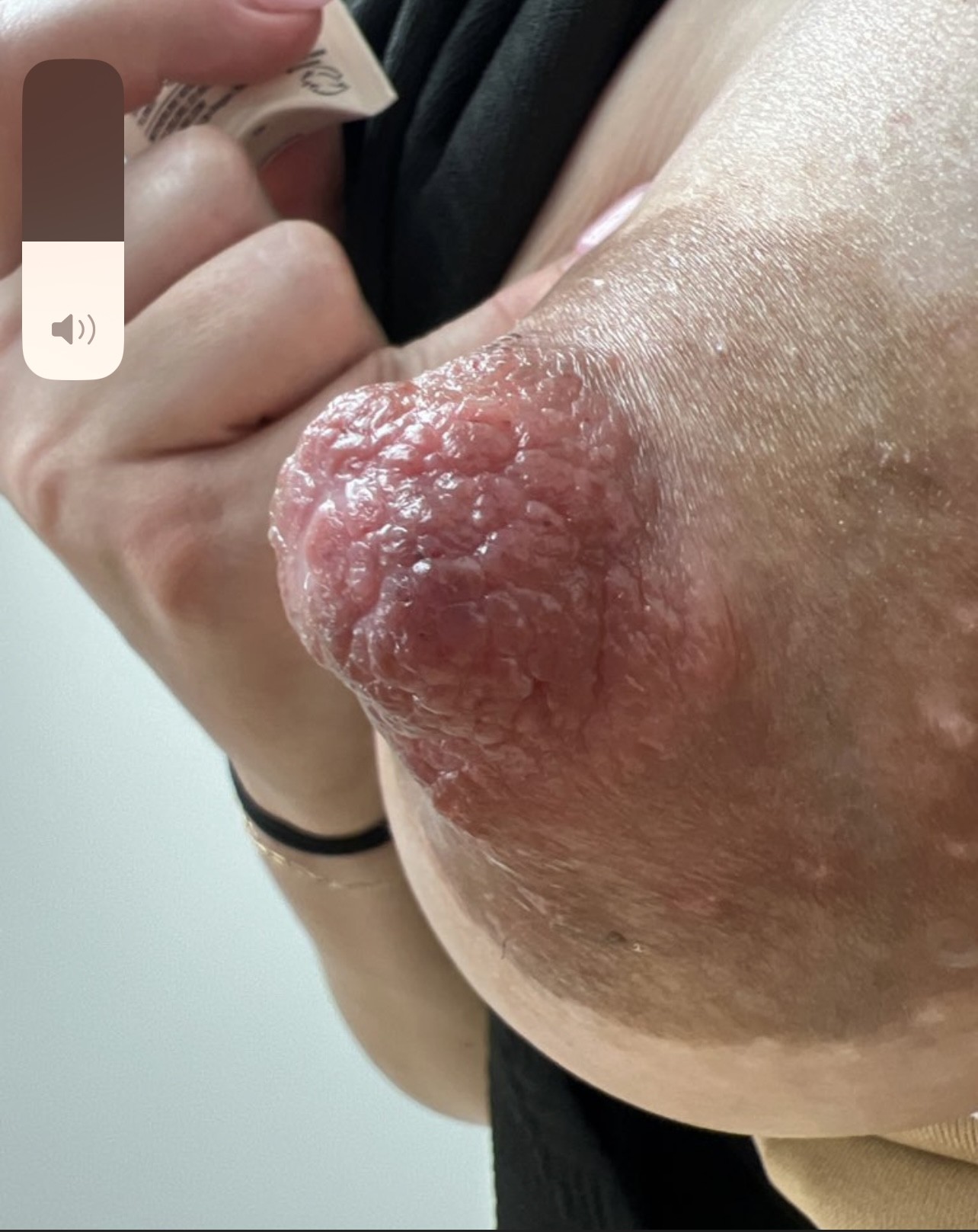
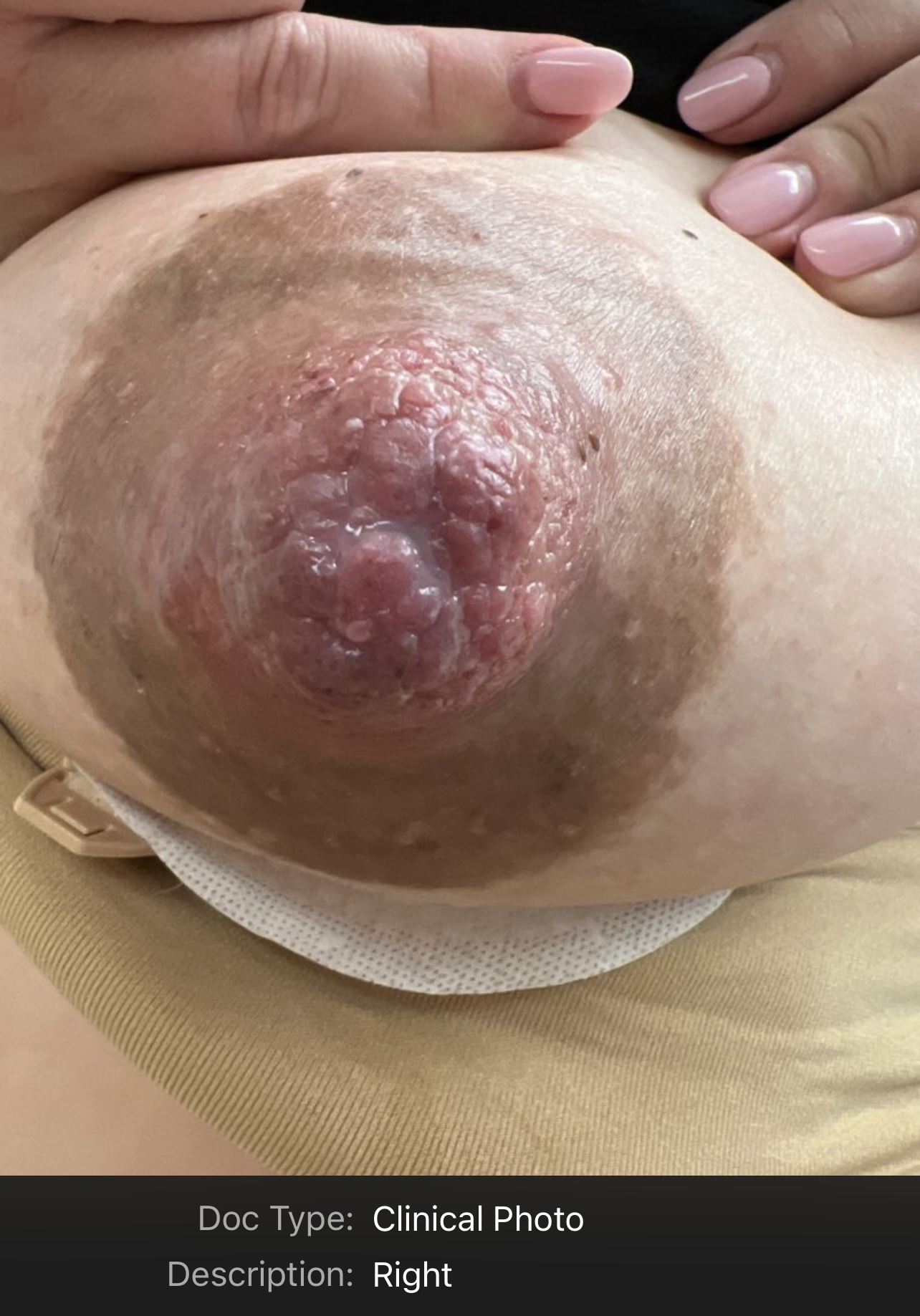
Below are photos of breastfeeding women with moisture associated skin damage, due to overhydration from the topical treatments that were being applied to their inflamed and painful nipples, and which put them at increased risk of epithelial injuries.
Recommended resources
Interventions which don't help lactation-related nipple pain and wounds